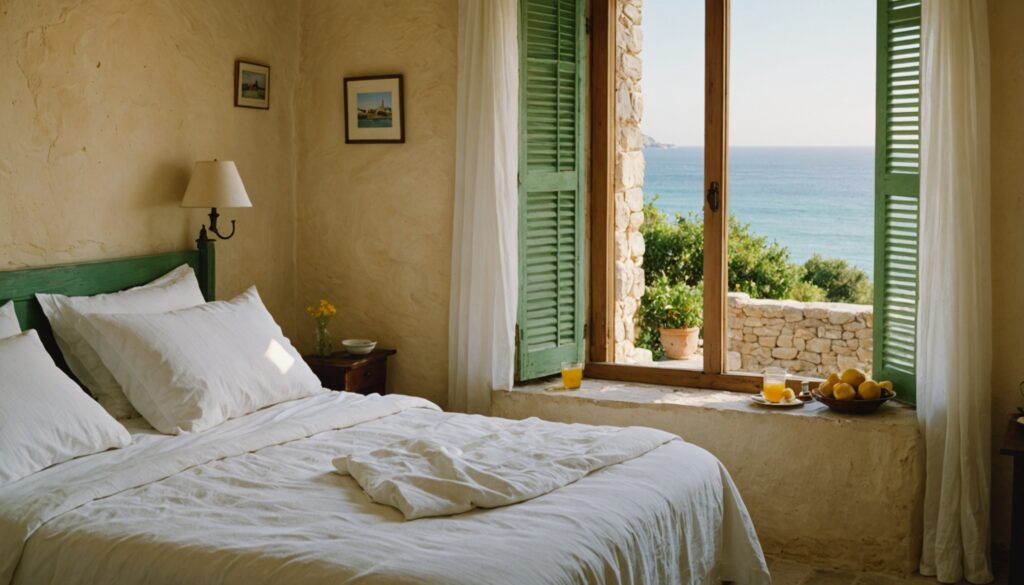
To sleep cooler with night sweats in Malta, start with the room: block the sun by day, ventilate or use a fan or air conditioning at night, and choose breathable bedding. These steps will not stop night sweats, but they can make them easier to live with. If they are frequent or new, mention them to your GP.
Why night sweats feel worse in a Maltese bedroom
Night sweats are part of what doctors call vasomotor symptoms, a group that also includes hot flushes. They are the hallmark symptoms of the menopause transition. A review in the BMJ notes that they are most pronounced during the first four to seven years but can persist for more than a decade, so this is often a long-haul issue rather than a passing phase (BMJ, 2023).
The sweats come from your body, but your bedroom decides how uncomfortable they are. Maltese summers combine warm nights, high humidity and stone or concrete buildings that hold heat long after sunset. A top-floor flat can still be warm at midnight. Humidity also makes sweat evaporate more slowly, so you feel damp for longer. If you want to read more about daytime heat, see our guide to coping with hot flashes in Malta’s summer heat.
Cooling your bedroom: what actually helps
None of these tips is a medical therapy, and the research on cooling-specific products is limited. They are common-sense steps that cost little and carry few downsides.
During the day
- Keep the sun out. Close shutters, blinds or curtains on sun-facing windows before the room heats up, not after.
- Keep the door shut on the hottest rooms so heat does not drift into the bedroom.
- Avoid heat sources in the bedroom in the afternoon: chargers, laptops and lamps all add a little warmth.
In the evening
- Open windows when the air outside is cooler than inside, ideally on opposite sides of the flat to create a cross-breeze. In Malta this may be late in the evening or even after midnight.
- Use a fan to move air across the room or the bed. Pointing it at your torso or feet is usually more comfortable than at your face.
- If you have air conditioning, pre-cool the room for a short while before bed rather than running it at the lowest setting all night. A very cold, dry room can wake you with a dry throat. A "dry" or dehumidifying mode can help with Malta’s humidity.
- Take a lukewarm shower before bed. A very cold one can make you feel alert and a hot one raises your temperature.
In the bed itself
- Choose breathable fabrics such as cotton or linen for sheets and nightwear. Synthetic fabrics tend to trap heat and moisture.
- Layer your bedding. A single sheet plus a light cover that you can kick off is easier than one heavy duvet.
- Keep a spare set of nightwear and a towel by the bed, so a sweat episode does not mean getting up and fully waking yourself.
- Keep a glass of water within reach, and a small hand fan if you like one.
Your options, from the simplest to the most involved
1. Free or low-cost: habits and room changes
Everything in the section above, plus a few habits. Many women notice that alcohol, spicy food, caffeine late in the day or a large late meal make night sweats feel worse. This is a common observation rather than a proven rule, so a simple diary of your evenings and your nights can show whether it applies to you. It suits almost everyone and costs little, although it may not be enough if sweats are frequent or severe.
Psychological approaches also cost little and can be done at home. A systematic review of 12 studies found that most group and self-help cognitive-behavioural therapies, and clinical hypnosis, for menopausal symptoms had positive effects on sleep in women with hot flushes and night sweats (Post Reprod Health, 2024). Sleep was a secondary outcome in those studies, so treat the findings as encouraging rather than definitive. A Cochrane review of relaxation techniques describes them as relatively harmless but notes that their effectiveness for hot flushes and sleep problems remains debatable (Cochrane, 2014). If they help you wind down, they are worth trying, but do not expect them to switch the sweats off.
2. Paid extras for the room and the bed
A good fan is the cheapest step up, and it usually costs far less to run than air conditioning. Air conditioning, particularly an inverter model, gives the most reliable cooling, but running costs and noise are real considerations, and it may not be possible if you rent. Breathable bedding and moisture-wicking nightwear are an inexpensive upgrade. Cooling pillows and mattress toppers exist, but evidence that they reduce night sweats is limited, so start with the basics.
Food supplements sit in a different category. A British Nutrition Foundation review found that soy isoflavones may reduce the frequency or severity of vasomotor symptoms, but results are inconsistent. It said that black cohosh and St John’s Wort are not currently recommended because of uncertainty about dose, preparation and safety (Nutr Bull, 2023). A systematic review of omega-3 trials in postmenopausal women found potential benefits for hot flushes and night sweats in four of nine studies, so the picture is mixed (Nutrients, 2023). Supplements do not replace medical care. Ask a pharmacist before starting one, especially if you take other medicines.
3. Seeing your GP
This is the most involved route, but it is the right one if sweats soak your sleepwear, wake you several times a night or affect your mood and work. Estrogen-based hormone therapy is the most effective treatment for many menopausal symptoms and, in the absence of contraindications, has a generally favourable benefit-to-risk balance for women under 60 and within 10 years of menopause onset. Non-hormonal options are also available (BMJ, 2023). Whether any of these suits you depends on your health history, so it is a conversation to have with a doctor, not something to decide from an article. Hormone therapy is not suitable for everyone, which is why an individual assessment matters.
When night sweats need a GP, not just a fan
Night sweats are not always hormonal. Book an appointment if:
- they are new and you are well under 40 or have no other changes in your cycle;
- they come with fever, unexplained weight loss, a persistent cough or swollen glands;
- they began after you started a new medicine;
- you also have a racing heart, tremor or feel unusually anxious, which can point to a thyroid issue;
- they leave you exhausted, low or struggling to function.
If you are in your late thirties or forties and wondering whether your cycle is shifting too, our articles on the early signs of perimenopause and on whether perimenopause can start at 38 may help you decide what to ask your doctor.
Frequently asked questions
What temperature should my bedroom be for night sweats?
There is no single proven number. Most sleep guidance suggests a cool, comfortable room, and many people sleep better when it is noticeably cooler than the daytime living space. With Malta’s warm nights you may not reach that without a fan or air conditioning, so aim for the coolest practical option and judge by how you feel.
Is a fan or air conditioning better for night sweats?
Air conditioning cools the room itself, while a fan moves air and helps sweat evaporate. In dry heat a fan can be enough. In Malta’s humidity, a fan alone may feel sticky on the hottest nights. Many people use a fan to reduce reliance on air conditioning, or run both at modest settings.
Will cutting out alcohol or spicy food stop night sweats?
Not reliably. Some women find these make sweats worse, and cutting back is free to try, but menopause-related night sweats can happen regardless. Use a diary to see whether it makes a difference for you.
Can I still use a hot water bottle or heavy duvet in winter?
Yes, if it is comfortable. Maltese winters can be damp and chilly, so layers you can remove quickly work better than one heavy cover. Natural fibres help, and keeping the room at a steady, moderate temperature may reduce the swing between feeling cold and overheating.
References
- Management of perimenopausal and menopausal symptoms (BMJ, 2023)
- The role of diet in managing menopausal symptoms: a narrative review (Nutr Bull, 2023)
- Sleep effects of psychological therapies for menopausal symptoms: a systematic review (Post Reprod Health, 2024)
- Omega-3 intake and vasomotor symptoms, sleep quality and depression in postmenopausal women (Nutrients, 2023)
- Relaxation for perimenopausal and postmenopausal symptoms (Cochrane, 2014)
This article is for general information and does not replace advice from your GP or pharmacist. It comes from Brasil Botanique, the wellness brand behind this blog, which is being created for women in Malta.